
How to Choose the Right School Backpack for Your Child
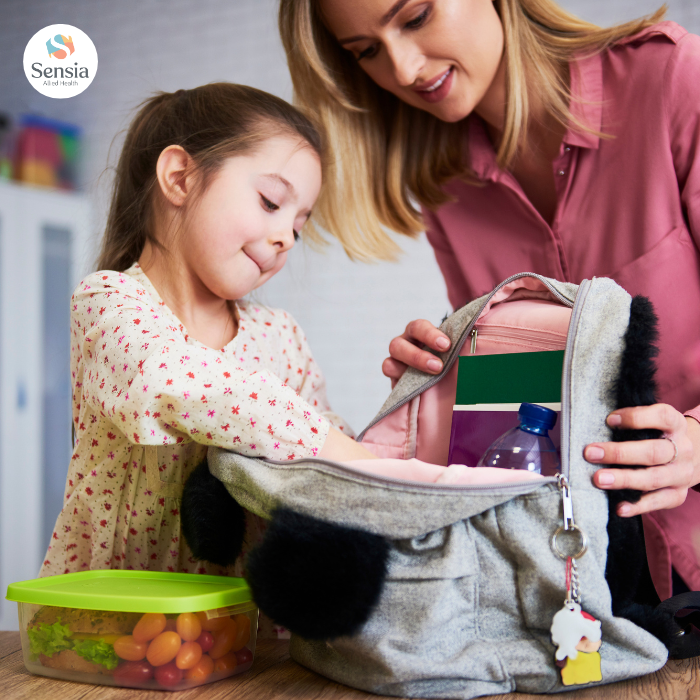
A school backpack is something your child uses every day, often for many years. While it might seem like a simple purchase, the right backpack can make a big difference to your child’s comfort, posture and ability to move easily throughout the school day.
Many schools now provide or recommend specific backpacks as part of their uniform. While these options can be practical and convenient, it’s still important to check that the backpack is the right fit for your child.
Here are some key recommendations from Sensia’s paediatric physiotherapist to help you choose a backpack that supports your child’s growing body and prevents discomfort, fatigue, or posture issues.
SIZE: Choosing the Right Size
Backpacks should be sized to the child, not something they “grow into”.
A well-fitting backpack should:
Fit your child’s height and body size
Sit below the shoulders when seated
Not be wider than the torso
Sit close to the back without sagging or pulling backwards
MOVEMENT: Supporting Natural Movement
A well-fitted backpack should allow your child to move freely throughout the day. Check that it:
Doesn’t swing side-to-side when walking
Doesn’t alter arm swing
Is not carried using only one strap
Allows your child to walk, run, and climb stairs comfortably
ACCESSIBILITY: Easy to use
A backpack that is easy to access promotes independence and reduces frustration. Your child should be able to:
Open and close zippers independently
Reach pockets comfortably without struggling
STRAPS: Comfort and Fit
Shoulder straps are key for comfort and stability. Look for straps that:
Are wide and well-padded
Sit securely on the shoulders without digging in
Are adjustable to fit your child properly
Are evenly adjusted on both sides
WEIGHT: Load and Distribution
Even the best backpack can cause problems if it’s too heavy or packed incorrectly. Keep in mind:
The backpack should weigh no more than 10% of your child’s body weight
Heavier items should be packed close to the back
Use both shoulder straps, not just one
The bag shouldn’t be so heavy that your child leans forward or is pulled backwards
A backpack with a firm but padded back panel can also help distribute weight more evenly and improve comfort.
When to Seek Extra Support
If your child regularly complains of back, neck, or shoulder pain, or has difficulty moving while wearing a backpack, it may be time to reassess the fit, weight, or style.
A paediatric physiotherapist or occupational therapist can assess posture, movement, and daily school demands to provide tailored recommendations. At Sensia Allied Health, our team is here to help ensure your child’s backpack supports their health, comfort, and confidence at school.