
Is My Child’s Handwriting on Track? A Parent Guide for Ages 4–7
What’s Typical and When to Seek Support
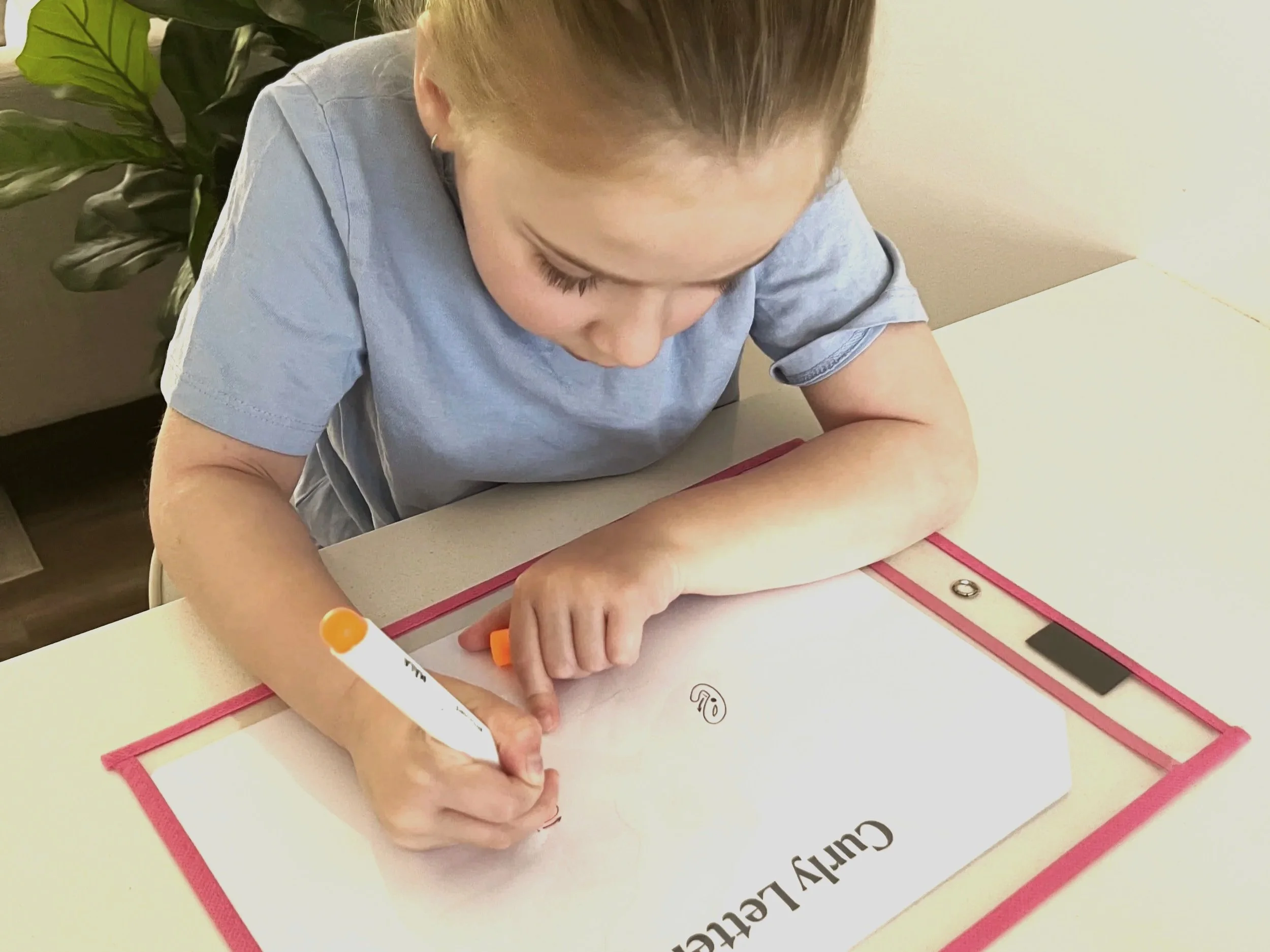
For many children, learning to write is an exciting milestone. It is often one of the first visible signs of school readiness and growing independence. But for some children, handwriting can feel frustrating, tiring or much harder than expected.
At Sensia Allied Health, we often hear parents ask:
“Is this normal?”
“Should they still be reversing letters?”
“Why do they avoid writing?”
The early years of handwriting development, particularly between 4 and 7 years, are a time of rapid skill building. Children are not just learning how to form letters. They are also developing the fine motor, visual, postural and attention skills that make handwriting possible.
What skills are needed for handwriting?
Handwriting is actually a very complex task. To write successfully, children need a combination of skills working together, including:
Fine motor control to hold and move the pencil
Hand strength to maintain grip and control
Core and shoulder stability to sit upright and use the hands effectively
Bilateral coordination to stabilise the paper with one hand and write with the other
Visual motor integration to copy shapes, letters and words
Motor planning to remember and sequence letter formation
Attention and endurance to stay engaged with writing tasks
When one or more of these skills is still developing, handwriting can feel slow, messy or effortful.
What is typical handwriting development between 4 and 7 years?
Every child develops at their own pace, but there are some general patterns we expect to see across these years.
Around 4 Years
Children may begin to:
Draw simple shapes such as circles, crosses and squares
Attempt to write their name
Use a developing pencil grasp
Show emerging hand preference
Copy some letters or symbols
At this stage, writing often looks large, uneven and inconsistent, and that is okay.
Around 5 Years
Children may begin to:
Write some upper and lowercase letters
Copy their name more accurately
Use improved pencil control
Begin forming letters with more intention
Stay at the table for short writing tasks
Letter reversals, inconsistent sizing and variable spacing can still be common at this age.
Around 6-7 Years
Children may begin to:
Write most letters with greater consistency
Improve spacing between words
Use more efficient pencil control
Copy short sentences from the board or page
Write with better speed and legibility
At this stage, children are usually expected to begin using handwriting more functionally in the classroom.
When should parents be concerned?
Not every child who finds handwriting difficult needs intervention. The goal is not “perfect handwriting”, the goal is functional handwriting.
A child’s handwriting is generally working well for them if they can:
Write comfortably
Produce work that is mostly readable
Keep up with age-appropriate classroom tasks
Write without significant frustration or fatigue
It may be worth seeking support if your child:
Avoids drawing, colouring or writing
Complains that writing is hard or “too much work”
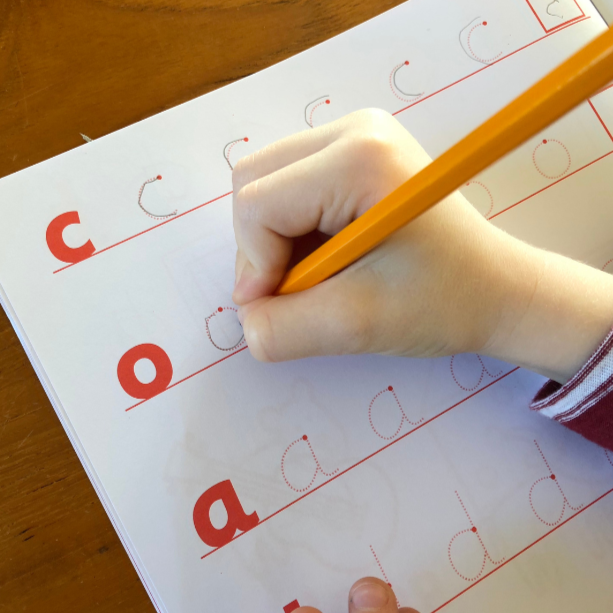
Has difficulty holding the pencil in a workable way
Tires very quickly during writing tasks
Uses excessive pressure or very light pressure
Struggles to copy shapes, letters or words
Has very poor letter formation beyond what is expected for their age
Finds it difficult to sit upright and stay stable at the table
Becomes upset or frustrated during writing activities
Has difficulty keeping up with classroom demands
Sometimes handwriting challenges are about more than the pencil itself. They may reflect underlying difficulties with motor skills, posture, visual processing or coordination.
How to support handwriting at home
The good news is that handwriting does not need to start with worksheets.
In fact, younger children often make the most progress through play-based activities that strengthen the foundation skills needed for writing.
Helpful activities include:
Drawing, colouring and tracing
Playing with playdough or putty
Peg activities and threading
Cutting and craft tasks
Building with blocks or Lego
Puzzles and sticker activities
Vertical surface play such as drawing on an easel or whiteboard
Fine motor games that build finger strength and control
These activities help develop the muscles, coordination and control that support more efficient handwriting later on.
Why early support can make a difference
When handwriting feels hard, children can quickly lose confidence. They may begin to avoid writing tasks or feel frustrated in the classroom, even when they have great ideas to share.
Early support can help children:
Build confidence
Develop more efficient pencil control
Improve letter formation and legibility
Strengthen fine motor and visual motor skills
Reduce frustration around writing tasks
Feel more successful at school
The earlier we can identify what is making handwriting hard, the easier it is to support skill development in a positive and practical way.
Sensia’s Handwriting Program
At Sensia Allied Health, our at home Handwriting Program ‘Write On!’ is designed to support younger children aged 4–7 years who are developing early writing skills or finding handwriting more challenging than expected.
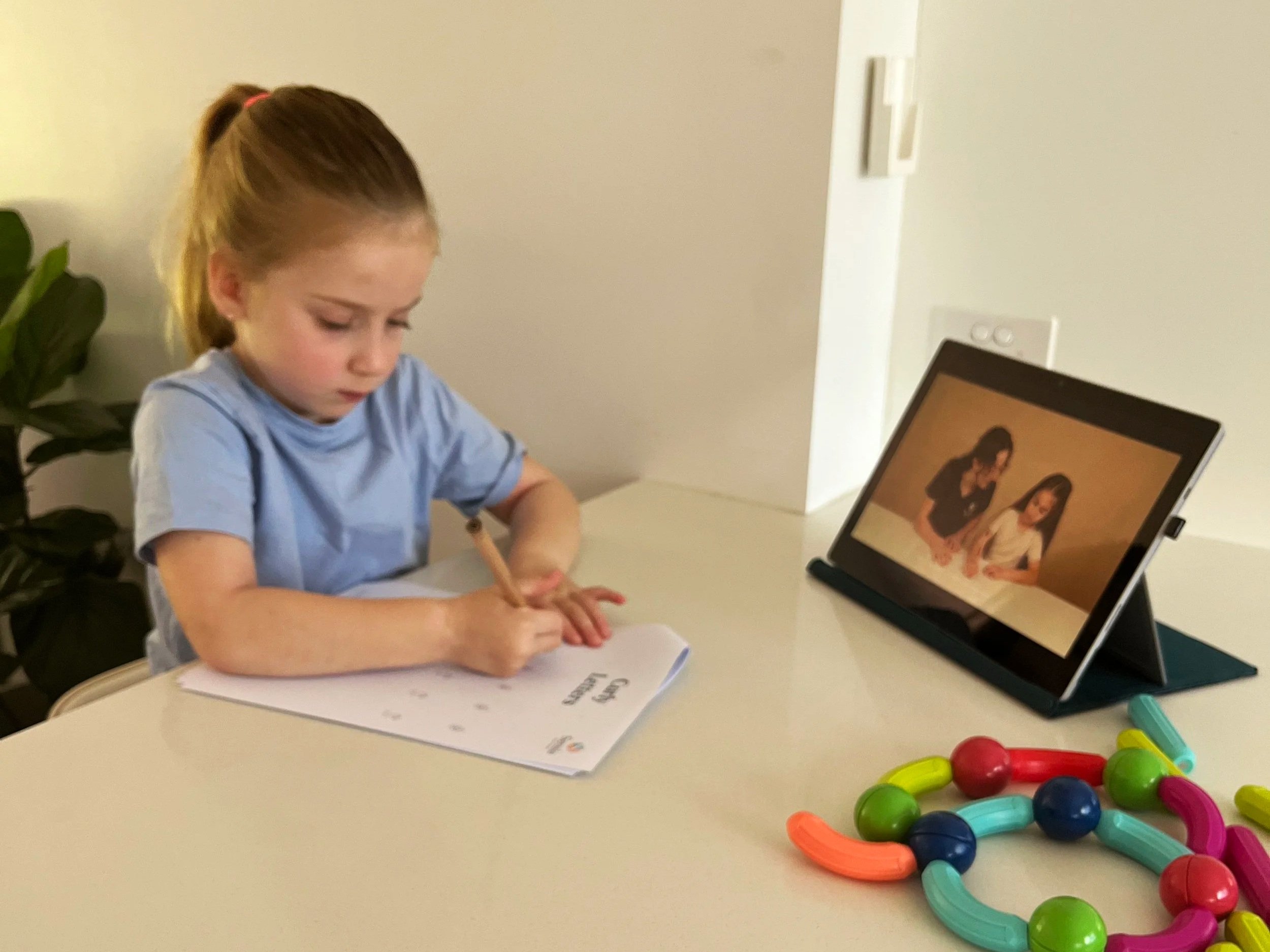
From the comfort of your home, your child follows along with a Sensia clinician on screen, and a child demonstrating each activity alongside them. This makes it easy to understand exactly what to do and how to support your child step-by-step.
The program is designed to be simple, engaging, and easy to use at home. Each kit provides access to an online, structured program, plus all the resources needed so families can support progress in a consistent and manageable way, without needing prior therapy experience.
Our program may support children who are:
Starting school or in the early years of primary school
Struggling with pencil grasp or pencil control
Finding letter formation difficult
Avoiding writing or drawing tasks
Experiencing reduced confidence with early school tasks
Needing support with fine motor or visual motor foundations
Why parents love it
All the resources you need, in one kit
Practical activities that fit into everyday routines
Clear progression so you can see skill development over time
Play-based tasks that keep children engaged
Designed by occupational therapists who understand classroom expectations
The program focuses on:
Pencil grasp and control
Fine motor strength and coordination
Pre-writing and letter formation skills
Postural stability and hand use
Visual motor integration
Confidence and participation in writing tasks
Our goal is not just neater writing. It is helping children feel more capable, comfortable and confident when using handwriting in everyday life.
Wondering if your child would benefit?
A little extra support can go a long way
If handwriting is becoming a struggle, Write On! gives you practical, expert-guided support at home to help your child build the foundations for writing success. See how it works by clicking on the Learn More button below.